Eastern subterranean termites enter older Pittsburgh homes by moving upward through foundation fissures, porous sandstone mortar, or weeping tile systems to consume cellulose-dense framing. In hilly neighborhoods like…
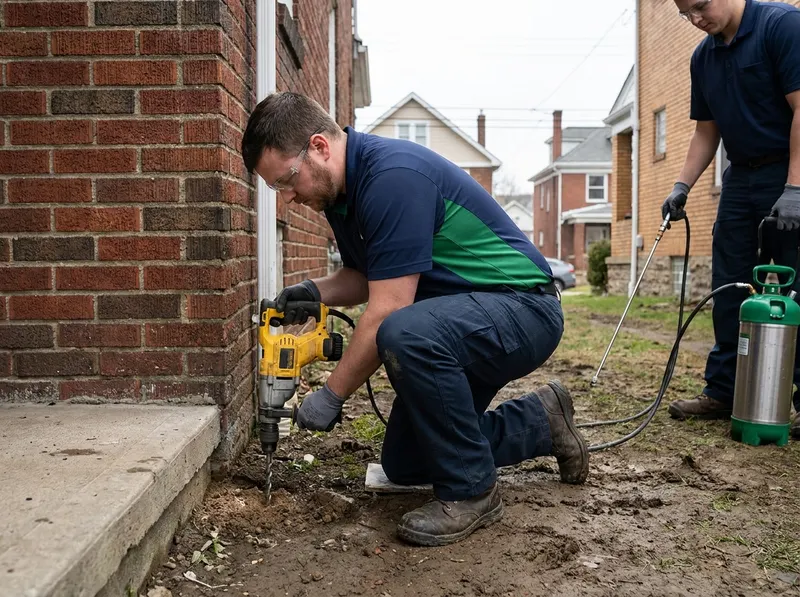
Eastern subterranean termites enter older Pittsburgh homes by moving upward through foundation fissures, porous sandstone mortar, or weeping tile systems to consume cellulose-dense framing. In hilly neighborhoods like Mount Washington and Brookline, properties built on sloping lots present uneven hydro-static pressures that crack aged block walls. Subterranean termite soil treatments use liquid termiticides such as non-repellent fipronil formulations applied at labeled rates of 4 gallons per 10 linear feet per foot of depth. Workers trench 6 inches wide by 6 inches deep against the exterior brick, stone, or poured concrete foundations. The liquid saturates the soil zone, ensuring foraging worker insects cross the barrier undetected and carry the chemical back to the subterranean colony nest beneath the frost line.
Older housing architecture in Shadyside, Squirrel Hill, and Lawrenceville frequently features stone rubble foundations, interior dirt-floor cellars, and decorative concrete front stoops abutting timber sill plates. Soil injection fits structural situations where exterior excavation is uninterrupted by shared party walls. If a rowhouse or commercial structure in South Side Flats, Bloomfield, or East Liberty shares attached masonry walls or has high lot-coverage, mechanical drilling along the interior basement slab perimeter is required. Technicians drill through horizontal concrete at 12-inch intervals, inject the continuous fluid barrier, and patch the drill holes flush with specialized masonry compound.
Termite soil treatments differ technically from exterior bait stations. Soil barriers establish an immediate lethal zone surrounding structural timbers, which arrests framing destruction inside 60 to 90 days. Bait monitoring systems do not saturate the ground and require workers to check subterranean traps quarterly, making baiting better suited for properties built over shallow water tables or sensitive riparian zones near Allegheny County waterways. The operational trade-off of a soil barrier treatment involves initial mechanical site alterations: concrete slabs, front entry steps, and garage transitions must be drilled to maintain uninterrupted chemical coverage around the entire building envelope.
Every job gets a firm, written price after a free on-site visit.
Tell us about your subterranean termite soil treatments job in Pittsburgh and we'll send a clear, written quote, usually the same day.
 Rendivo Exterminators