Older architecture throughout Allegheny County presents distinct vulnerabilities to aerial nesting insects. Victorian soffits in Shadyside, cedar shingles in Squirrel Hill, and exposed porch overhangs across Brookline…
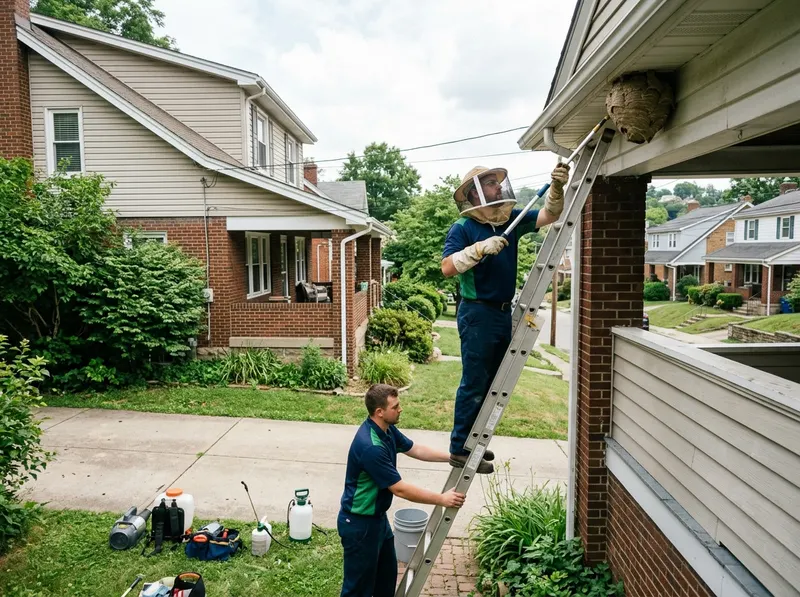
Older architecture throughout Allegheny County presents distinct vulnerabilities to aerial nesting insects. Victorian soffits in Shadyside, cedar shingles in Squirrel Hill, and exposed porch overhangs across Brookline offer ideal shelter for fertile spring queens establishing embryonic cells. Stinging insect colonies expand rapidly between June and September, often growing from a modest golf-ball-sized envelope into a 3-foot paper comb containing over 4,000 active workers. When colonies establish beneath second-story dormers or along tight property lines in Bloomfield and Lawrenceville, close human and pet activity triggers aggressive defensive stinging events. Integrated pest management protocols isolate the nesting site using pressurized, targeted knockdown agents before detaching the structural matrix, preventing insect dispersal into living areas.
Nest removal fundamentally differs from continuous exterior chemical barrier sprays. Standard spraying repels surface foragers but leaves behind the pheromone-soaked core comb, leading to structural reinfestation through the same fascia cracks the following season. Proper resolution requires complete physical detachment of the brood comb, vacuum extraction of airborne adults, and precise micro-encapsulated dusting within brick weep holes, boxed eaves, and roofline seams. In steep-grade communities such as Mount Washington and South Side Flats, three-story vertical rooflines require specialized extension equipment to clear aerial hornets without damaging vintage slate or wood surfaces.
Every structural intervention requires assessing exterior accessibility versus hidden void nesting. When hornets construct free-hanging aerial nests beneath porch roofs, removal is mechanical and immediate. If yellowjackets penetrate a brick-and-timber void near East Liberty brownstones, technicians identify the precise flight path through thermal detection, inject non-repellent structural dust, and seal the primary breach using heavy-gauge copper mesh and silicone sealants once colony movement ceases. Interventions use low-toxicity, child- and pet-conscious formulations focused entirely on the nesting cavity, eliminating the requirement for recurring monthly maintenance contracts.
Every job gets a firm, written price after a free on-site visit.
Tell us about your stinging insect and aerial nest removal job in Pittsburgh and we'll send a clear, written quote, usually the same day.
 Rendivo Exterminators