Pest control service Pittsburgh properties require addresses the acute contamination risks, architectural vulnerabilities, and structural intrusions common to local housing stock. Field technicians identify nesting sites, establish physical barrier lines, and eradicate active biological vectors inside single-family residences, brick rowhomes, and multi-unit buildings throughout Allegheny County.
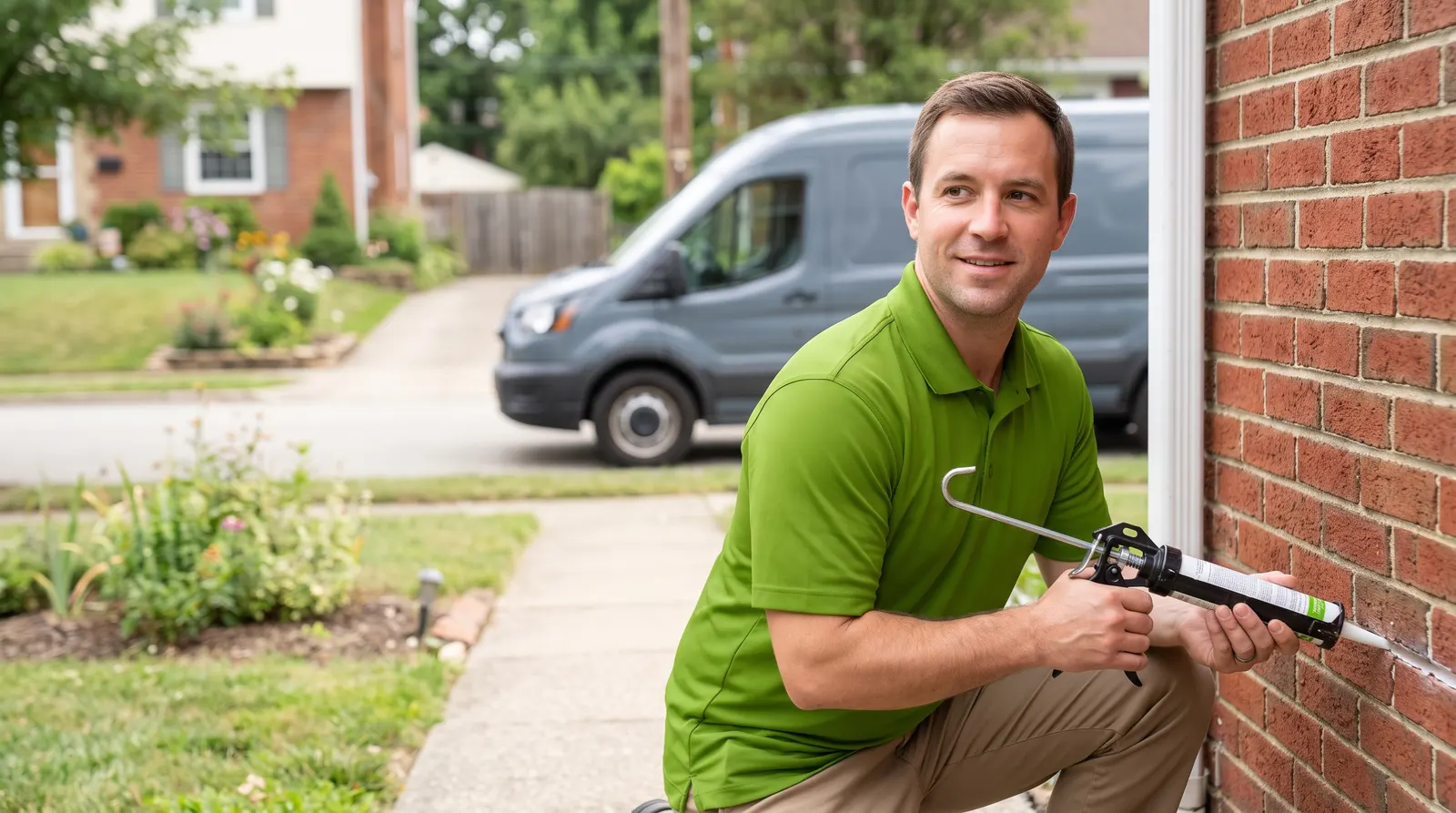
Pest control service in Pittsburgh is a specialized domestic remediation and structural exclusion process that eliminates active insect and rodent infestations from residential structures while securing building perimeters against re-entry.
Every service reflects the same meticulous attention to detail, whether it's a single job or a larger pest control service project across Pittsburgh.
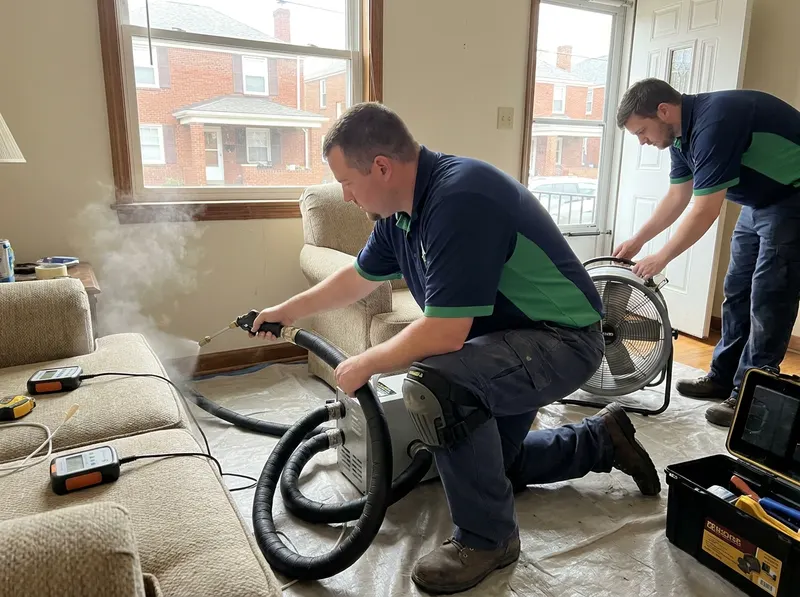
Bed bug remediations deploy specialized electric and hydronic heating systems that elevate structural voids, wall cavities, baseboards, and interior fabrics to a sustained lethal thermal threshold of 122°F to 135°F for at least 4 continuous hours. This temperature penetrates mattress seams, box springs, headboards, and electrical junction boxes, denaturing proteins in all life stages including adult Cimex lectularius, active nymphs, and unhatched eggs. To prevent fugitive migration through party walls, technicians simultaneously apply micro-encapsulated synthetic pyrethroids and silica-based desiccant dusts into perimeter baseboard voids, carpet tack strips, and electrical conduit channels. HEPA vacuums extract concentrated harborage clusters before thermal treatment, eliminating biological allergen loads, fecal stains, and cast skins. Technicians monitor thermal distribution using infrared thermography and real-time wireless sensors placed at the lowest foundation and wall thresholds, ensuring zero cool spots remain where pests can shelter. Follow-up diagnostic inspections 14 to 21 days post-treatment confirm total life-cycle eradication without forcing property owners to discard expensive upholstery or bedroom furniture sets.
Get a quote →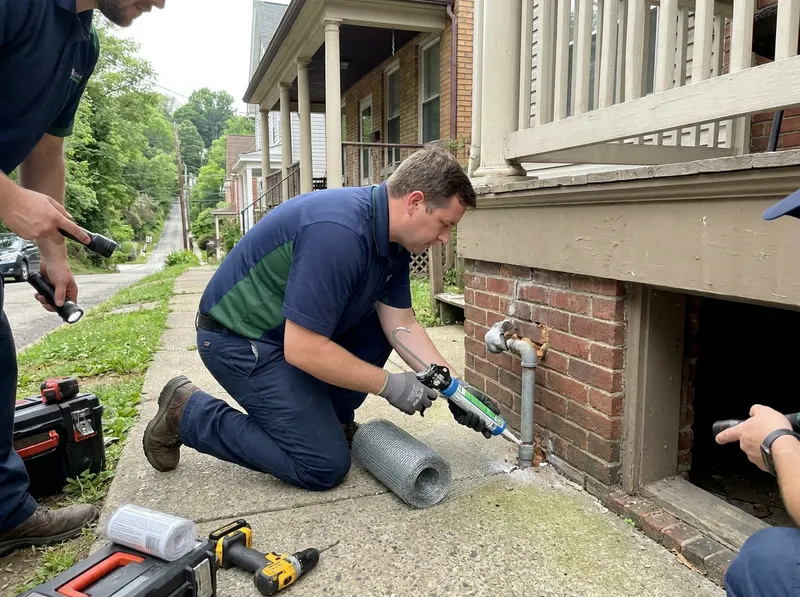
Rodent exclusion programs eliminate active rodent infestations while physically re-engineering building vulnerability points to block recurring seasonal entry. The service begins with a forensic assessment mapping sebum rub marks, gnaw patterns, droppings, and urine fluorescence across basements, crawlspaces, drop ceilings, and rooflines. Inside the structure, technicians establish closed-box mechanical snap traps along primary travel lanes, avoidance corners, and floor joist ledges to swiftly clear existing populations without placing unsecured rodenticides inside living areas or pet access zones. Exterior remediation targets structural vulnerabilities: technicians pack gaps exceeding 1/4 inch with rust-proof stainless steel wire mesh, woven copper Stuf-fit mesh, and dual-component expanding polyurethane foam impregnated with abrasive bittering agents. Mortar joints along crumbling rubblestone foundations are re-pointed using hydraulic cement, while subterranean utility penetrations, gas lines, conduit entries, and HVAC condensate sleeves receive custom-fitted galvanized metal escutcheon plates. Heavy-duty brush sweeps and aluminum astragal seals are fitted along basement bulkhead doors and garage entries to prevent perimeter intrusions.
Get a quote →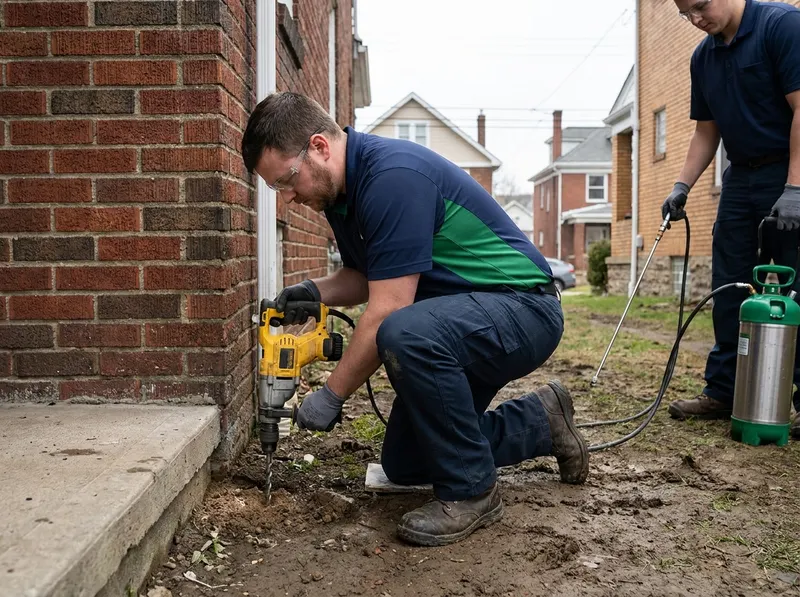
Subterranean termite abatement stops active Reticulitermes flavipes colonies from compromising structural sill plates, floor joists, rim boards, and wall studs. Field specialists dig continuous trenches measuring 6 inches wide by 6 inches deep immediately adjacent to foundation walls, piers, and chimney bases. Non-repellent liquid termiticides containing fipronil or imidacloprid are applied at a calibrated rate of 4 finished gallons per 10 linear feet per foot of depth, saturating the soil column down to the footing. For attached concrete slabs, front porches, driveways, and finished basement floors, technicians drill precision 1/2-inch holes through masonry on 12-inch centers, injecting termiticide under controlled pressure into the sub-slab gravel base before sealing each port with expanding hydraulic cement plugs. Foraging termites unknowingly pass through the undetectable liquid barrier, transfer the active ingredient throughout the colony through grooming and trophallaxis, and induce complete colony collapse within 60 to 90 days. Treatments include exterior foundation wood moisture testing and follow-up perimeter visual inspections.
Get a quote →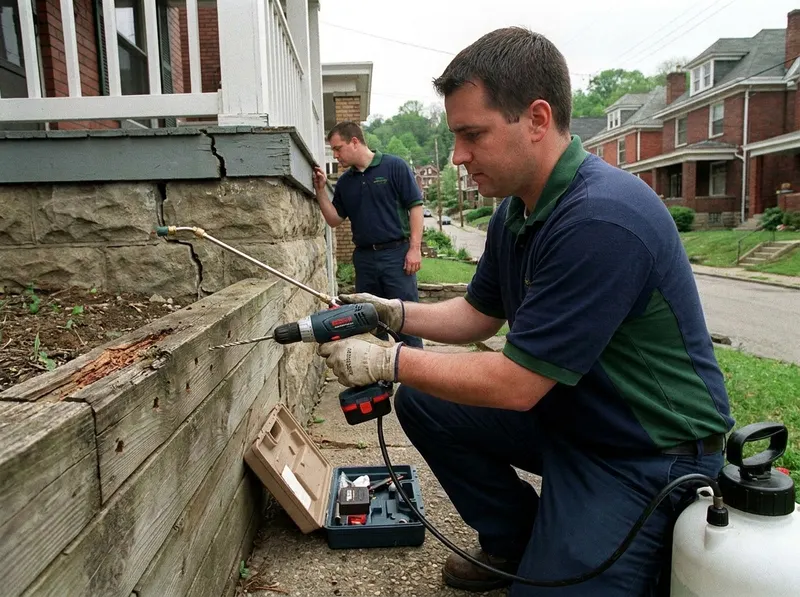
Carpenter ant management programs systematically locate and dismantle parent and satellite nests burrowing inside structural wall framing, roof valleys, window headers, and subfloor assemblies. Because Camponotus pennsylvanicus excavates smooth nesting galleries inside wood softened by water leaks, condensation, or fungal rot, technicians begin by inspecting high-moisture zones using penetrating acoustic listening devices and thermal imaging cameras. Exterior treatments establish non-repellent transfer barriers using dinotefuran or chlorfenapyr along structural perimeters, tree canopy contact points, and roof drip edges. Foraging workers cross the treated zone, pick up microscopic chemical crystals, and carry them directly into hidden brood chambers, neutralizing the reproductive queen and larvae within 14 days. Technicians drill 1/8-inch micro-access ports into identified hollow wall voids or window framing pockets to inject expanding botanical pyrethrin foams, directly killing satellite colonies without compromising framing strength. The service includes locating moisture sources such as leaking gutters or plumbing line condensation that attract ants.
Get a quote →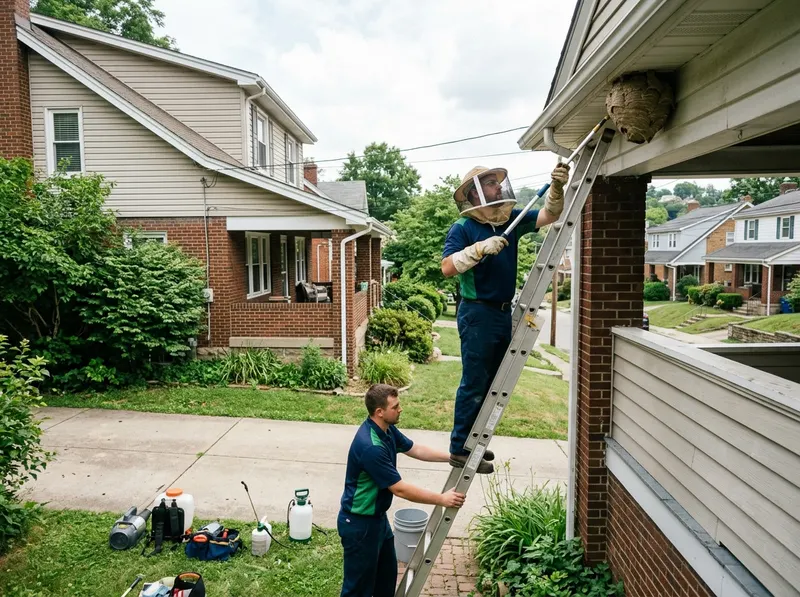
Stinging insect remediation safely neutralizes and removes aerial, subterranean, and structural nests built by bald-faced hornets, aerial yellowjackets, Polistes paper wasps, and subterranean ground hornets. Operations are conducted using full protective containment suits and specialized telescopic applicators capable of reaching structural peaks, roof overhangs, fascia boards, attic vents, and chimney caps up to 30 feet high without using heavy ladders on uneven hillside grading. Technicians inject rapid-action cryogenic freezing agents or specialized pressurized pyrethrin sprays directly into primary nest entry ports to instantly stun guard insects and suppress aggressive swarm responses. Once activity ceases, the complete physical nest structure is scraped free, detached, and removed in sealed bio-containment containers to prevent secondary carpet beetle infestations or honey-melting odors. Technicians then treat the physical attachment point with long-lasting residual repellent pyrethroids to deter arriving scout queens from establishing replacement nests on the same soffit or masonry anchor point later in the season.
Get a quote →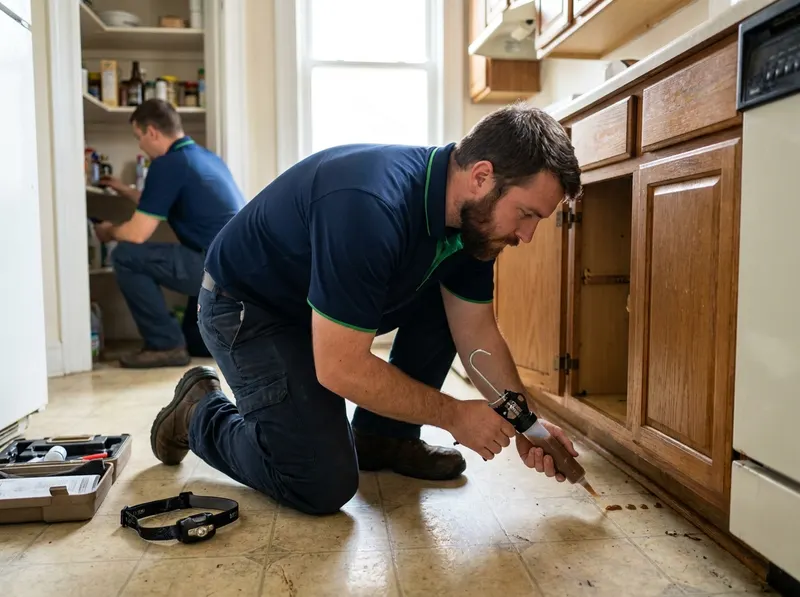
German cockroach remediation targets persistent Blattella germanica infestations in residential kitchens, commercial pantries, food preparation counters, and bathroom utility chases. Protocols bypass broad-spectrum aerosol sprays, which scatter roaches into adjacent living spaces, in favor of targeted micro-dose bait placements using non-repellent matrix gels containing indoxacarb, hydramethylnon, or abamectin. Technicians apply targeted pinpoint gel drops directly inside hidden harborages: cabinet hinge pockets, drawer slide undersides, refrigerator motor compressors, dishwasher insulation blankets, and wall void utility penetrations. Roaches consume the nutrient-dense bait, return to nesting crevices, and transfer lethal doses to nymphs and gravid females via coprophagy and necrophagy, causing cascading population crashes within 7 to 10 days. Technicians supplement bait applications with micro-fine insect growth regulators (IGRs) like pyriproxyfen, which prevent surviving nymphs from reaching sexual maturity or shedding exoskeletons. Monitoring boards track baseline catch counts across two follow-up visits to verify reproductive cessation.
Get a quote →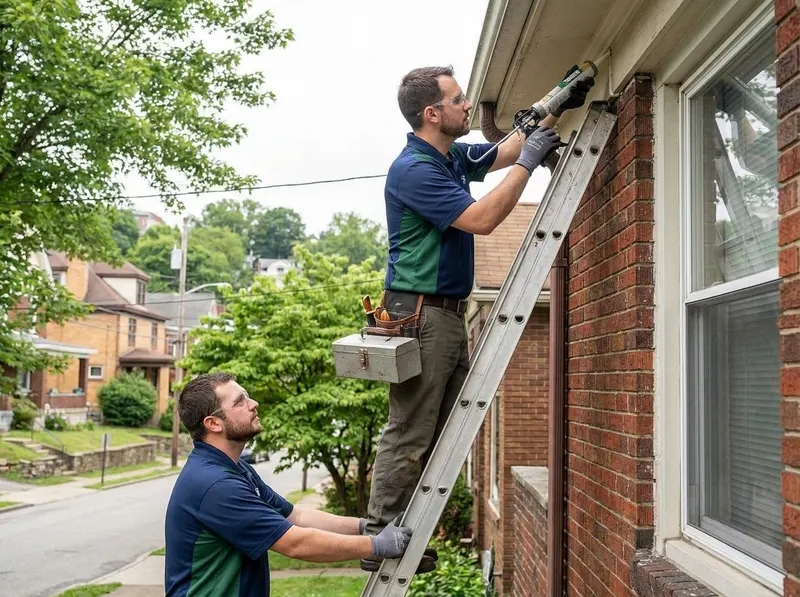
Autumnal overwintering insect treatments stop brown marmorated stink bugs (Halyomorpha halys), western conifer seed bugs, boxelder bugs, and multicolored Asian lady beetles from congregating inside living spaces. Beginning in late August before exterior temperature drops trigger interior migration, technicians inspect the upper two stories of residential siding, masonry joints, and rooflines. Exterior exclusion begins by sealing narrow gaps around window and door moldings, attic gable vents, soffit transitions, plumbing exhaust stacks, and exterior air conditioning penetrations using commercial-grade elastomeric sealants and fine 20-mesh copper insect screens. Following physical gap sealing, exterior perimeter sprays apply micro-encapsulated residual pyrethroids to sun-exposed south- and west-facing exterior vertical masonry, vinyl siding, chimney surfaces, and under-eave overhangs. This contact barrier intercepts arriving adult insects as they gather on warm structural faces, preventing them from slipping into wall insulation cavities where they shelter through winter and emerge into warm living quarters during mid-winter thaws.
Get a quote →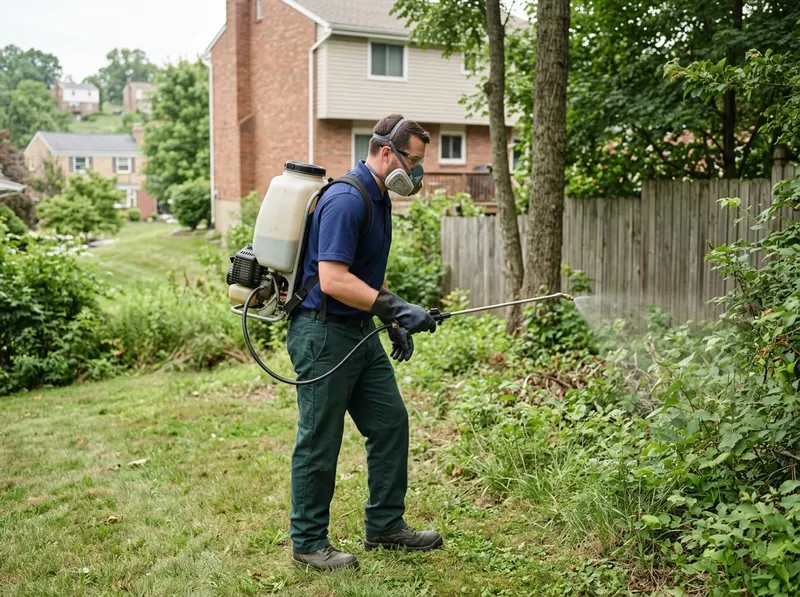
Residential flea and tick control creates a dual-layer defensive perimeter across residential turf, landscape beds, shaded soil zones, and exterior perimeter foundations. Initial treatments utilize dual-action formulas combining low-odor natural pyrethrins for immediate adult knockdown with residual insect growth regulators like novaluron to halt egg hatch and larval maturation in tall grass and leaf litter. Technicians focus applications on perimeter ecotones where wooded edges, decorative ground covers, and stone retaining walls meet residential lawns, the primary transfer points where wild vector hosts such as white-tailed deer, raccoons, and feral cats drop active blacklegged (deer) ticks and cat fleas. Crawlspaces, under-deck resting zones, and pet run perimeters receive targeted low-pressure barrier treatments calibrated to bond tightly with organic debris without leaching into groundwater or vegetable gardens. Treatments remain effective against all tick nymphal and adult stages for 30 to 45 days, dramatically reducing risks of Lyme disease and tapeworm transmission while drying completely within 2 hours for safe pet use.
Get a quote →You get a firm, itemized quote for your pest control service before any work begins, no surprises, no pressure.
Careful prep, tidy work, and a full cleanup when we are done. We treat your home and belongings like our own.
The same trusted, background-checked team from the first call to the final check.
Selecting the proper intervention strategy depends directly on the biological vector, the structural material of the building envelope, and the degree of colonization. When active biological vectors are spotted inside living spaces such as bedrooms, nursery floors, or kitchen preparation areas, immediate targeted chemical remediation, micro-injector aerosol crack-and-crevice treatments, and localized HEPA-filtered vacuum knockdown are necessary to halt breeding cycles within 24 to 48 hours. If scratching, chewing sounds, or thermal signatures are localized within crawlspaces, cavity walls, drop ceilings, or attic insulation pads, mechanical snap trapping paired with heavy-gauge galvanized copper mesh exclusion along foundation sills is the required approach.
The primary operational trade-off centers on non-invasive exterior chemical barriers versus labor-intensive physical structural exclusion: perimeter liquid barriers provide rapid three-month knockdowns of foraging worker pests such as odorous house ants and subterranean termites but leave physical entryways open, whereas structural mortar pointing, silicone-polyurethane expansion sealing, door sweep retrofitting, and sill plate copper mesh packing demand higher initial physical labor while permanently barring entry without ongoing chemical dependency. For subterranean termite attacks near foundation walls, localized spot foams suppress localized activity within 48 hours, yet continuous non-repellent liquid soil trenching or sub-slab injection creates an unbroken 5-year chemical barrier that prevents hidden structural framing collapse beneath floor joists. Landlords managing multi-tenant rowhomes in high-density corridors often must balance single-unit tenant treatments against comprehensive whole-building envelope sweeps: treating a single unit costs less upfront but frequently forces active German cockroach colonies or bed bugs through common plumbing chases into adjacent units, whereas whole-structure treatment requires synchronized access and higher coordination while delivering permanent domestic eradication.
Every project gets a firm, written price after a free on-site visit. Ranges below for orientation.
Tell us about your pest control service job and we'll send a clear, written quote, usually the same day. Or just call and talk to a real Pittsburgh pro.
(412) 730-8164
Pittsburgh's steep river valley topography, combined with one of the oldest residential housing inventories in the United States, creates unique biological pathways for domestic pest infestations. The city's famous brick rowhouses and split-level homes in neighborhoods like Bloomfield, Lawrenceville, and the South Side Flats were built along steep grades using porous lime mortar and rough-cut sandstone rubblestone foundations. Over decades, freeze-thaw cycles and hillside soil movement open subterranean fissures along these foundation footings. Norway rats and house mice exploit these quarter-inch openings, navigating through shared party-wall cavities and unsealed subfloor plumbing channels beneath historic balloon framing. Across mature woodland interfaces surrounding Frick Park, Schenley Park, and Riverview Park, expansive tree canopies hang directly over slate and asphalt roof shingles, offering carpenter ant colonies direct highway access into fascia boards, roof valleys, and moisture-compromised window headers. Furthermore, the convergence of the Allegheny, Monongahela, and Ohio Rivers maintains elevated atmospheric humidity throughout valley corridors, providing the continuous ground moisture subterranean termites require to construct mud tubes up basement foundation walls. Addressing pest activity in Allegheny County requires deep knowledge of these specific architectural characteristics, replacing vulnerable lime mortar with hydraulic masonry compounds, securing copper screening behind aged decorative soffits, and installing heavy-duty door sweeps on warped cellar bulkheads across steep hillside parcels.
Free estimates for Pittsburgh & the surrounding area.
 Rendivo Exterminators