Carpenter ant colony abatement stops structural hollow-out inside damp subfloors, wall studs, roof valleys, and porch framing. Unlike subterranean termites that consume wood cellulose for food, black carpenter ants…
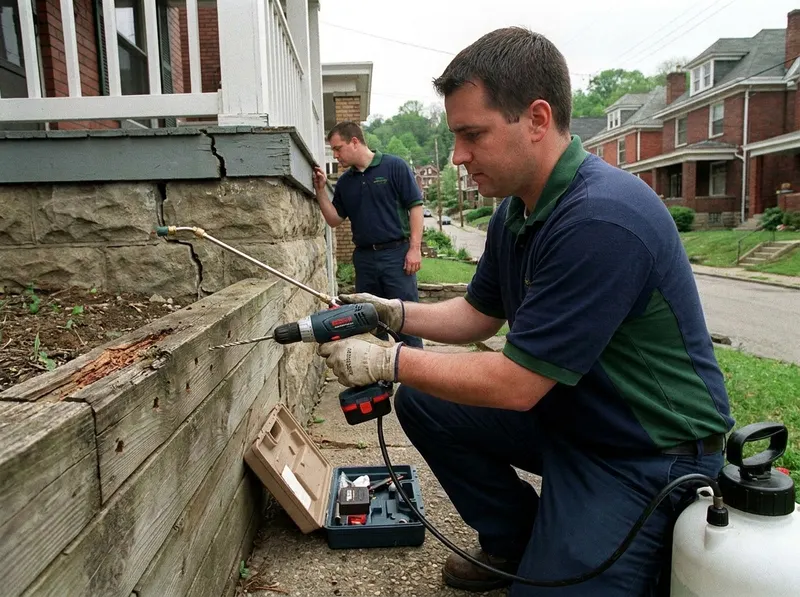
Carpenter ant colony abatement stops structural hollow-out inside damp subfloors, wall studs, roof valleys, and porch framing. Unlike subterranean termites that consume wood cellulose for food, black carpenter ants (Camponotus pennsylvanicus) excavate smooth galleries strictly to rear broods. In Pittsburgh's older housing stock, particularly brick-and-timber row homes in Lawrenceville and Bloomfield or historic Victorians in Shadyside and Squirrel Hill, satellite nests establish in seconds where roof drainage or mortar failures introduce dampness. Spot-spraying consumer pyrethroid sprays over baseboards kills visible foragers but causes the primary queen to disperse satellite nurseries into adjoining floor joists. Professional abatement utilizes non-repellent transfer insecticides and low-pressure localized void injections that foraging workers carry back to eliminate the parent queen.
Decision guidance relies on identifying the underlying nest tier. If indoor sightings involve solely dry-frass debris (wood shavings mixed with insect fragments) near window frames, satellite nest void-treatment resolves the issue without structural demolition. If winged swarmers emerge directly from baseboards between April and June, an established parent nest exists inside the building envelope or an adjacent dead hardwood tree within 100 feet. The service trade-off centers on non-invasive transfer insecticides versus wall-cavity drilling: non-repellent liquid transfers preserve historic plaster in neighborhoods like South Side Flats and East Liberty over a 14-to-21-day horizontal dispersal period, whereas selective mechanical void injections deliver immediate knockdown to acute localized satellite clusters. No locked-in annual maintenance contracts are required; treatments focus on single-colony elimination paired with moisture source identification.
Technicians evaluate topography and microclimates common to Allegheny County, such as the shaded hillsides of Mount Washington and Brookline where mature oak canopies hang over timber roof decking. Abatement treatments establish a continuous barrier using family- and pet-conscious Integrated Pest Management protocols, allowing treated surfaces to dry within two hours while maintaining active structural protection against wood-boring satellite reinfestation.
Every job gets a firm, written price after a free on-site visit.
Tell us about your carpenter ant colony abatement job in Pittsburgh and we'll send a clear, written quote, usually the same day.
 Rendivo Exterminators