Sloped landscapes and mature deciduous canopies in Pittsburgh neighborhoods like Squirrel Hill, Shadyside, and Brookline create moist microclimates where ticks and fleas thrive. Properties abutting wooded city borders…
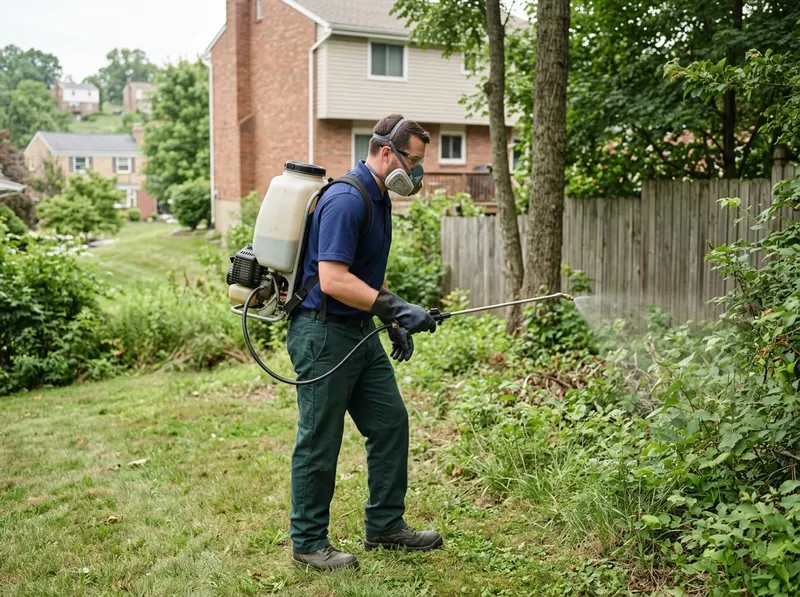
Sloped landscapes and mature deciduous canopies in Pittsburgh neighborhoods like Squirrel Hill, Shadyside, and Brookline create moist microclimates where ticks and fleas thrive. Properties abutting wooded city borders near Frick Park or Schenley Park face regular wildlife transit, bringing white-tailed deer, feral cats, and raccoons carrying external parasites directly to property edges. Standard broadcast lawn applications often fail because blacklegged ticks and flea pupae shelter in low-lying ivy, decaying ground litter, and beneath elevated wooden decks rather than out in open grass under direct sunlight. Professional yard spray programs target these specific high-humidity ecotones, focusing residual micro-encapsulated formulas where turf transitions into dense brush.
A single barrier spray fits active parasite outbreaks during peak spring nymph emergence or late-summer larval surges, whereas recurring season-long applications fit larger perimeter borders bordering Allegheny County ravines. Property owners facing sudden outdoor flea infestations often attempt total-lawn broadcast granules, but treating sunny, clipped turf delivers low return because larvae desiccate quickly in exposed soil. The trade-off between targeted perimeter barrier misting and widespread surface treatment is environmental precision versus chemical volume: directed applications concentrate active ingredients strictly along shady fence lines, stone retaining walls in Mount Washington, and ground-cover beds in Lawrenceville without saturating high-traffic open play areas.
Pre-treatment preparation ensures maximum efficacy and safety. Property owners must cut grass to standard three-inch turf heights, clear children's toys and pet dishes, and keep domestic animals indoors during the misting application. Once the liquid barrier contacts leaf surfaces and dries completely, typically 60 to 90 minutes in average Western Pennsylvania humidity, the treatment bonds to organic plant matter. This residual layer neutralizes adult ticks walking across vegetation and eliminates flea adults emerging from ground soil, providing immediate population suppression without requiring long-term, non-cancellable annual maintenance commitments.
Every job gets a firm, written price after a free on-site visit.
Tell us about your residential flea and tick yard sprays job in Pittsburgh and we'll send a clear, written quote, usually the same day.
 Rendivo Exterminators